It may not be the most glamorous part of pet ownership, but your pet’s stool can tell you a surprising amount about their overall health.
From digestion and hydration to stress and nutrition, changes in healthy dog or cat poop are often one of the first visible signs that something may be off.
The good news is that once you know what to look for, it becomes much easier to spot what is normal, what might need monitoring, and when it could be time to speak to your vet.

Why your pet’s stool matters
Healthy digestion plays an important role in your pet’s overall wellbeing. When food is properly digested and nutrients are absorbed efficiently, it often shows in consistent energy levels, healthy skin and coats, and regular bathroom habits.
Because stool is directly linked to digestion, it provides useful clues about:
- Diet quality
- Food tolerance
- Hydration levels
- Stress or routine changes
- Overall digestive health
A simple guide to healthy dog poop and healthy cat poop
Colour guide
Healthy
In most cases, healthy dog poop and healthy cat poop should be medium to dark brown.
What different colours may mean
- Very dark or black: May indicate digested blood and should be checked by a vet
- Red streaks: Could suggest irritation or bleeding lower in the digestive tract
- Grey or pale stool: Sometimes linked to digestion or bile issues
- Green stool: May happen after eating grass or certain foods
Occasional changes are not always cause for concern, but ongoing colour changes should not be ignored.

Texture guide
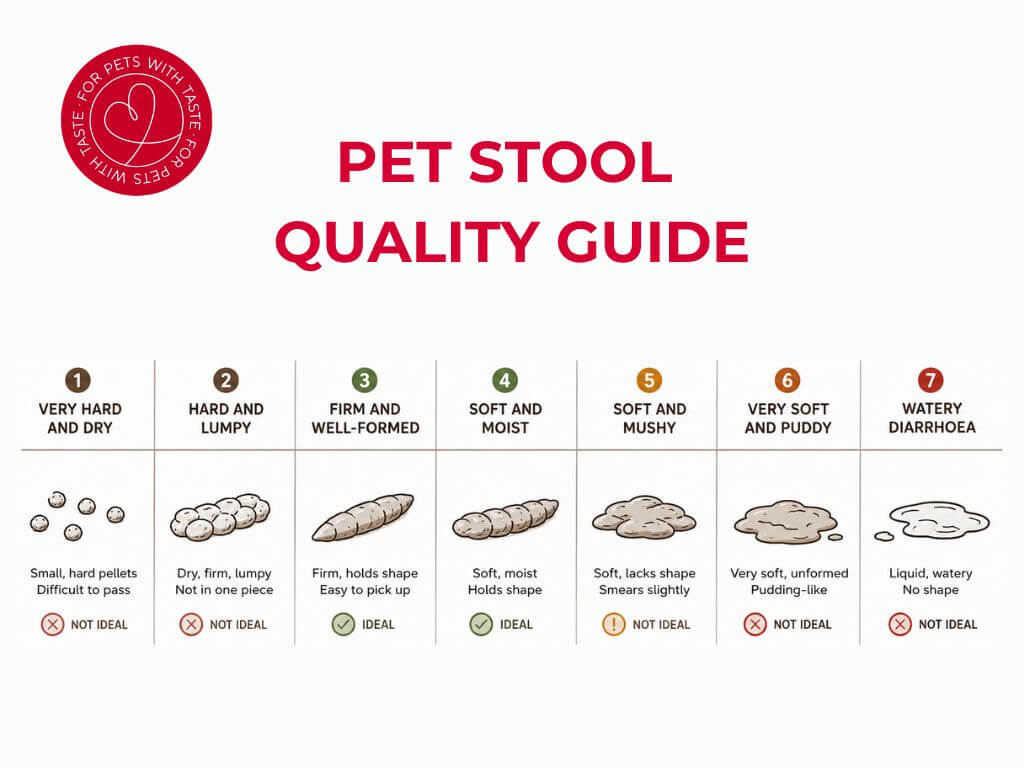
Healthy texture
A healthy stool should be:
- Firm but not hard
- Easy to pick up
- Well-formed
- Slightly moist without leaving residue
Signs something may be off
- Very soft or watery stool
- Dry, crumbly stool
- Mucus or slimy coating
- Stool that changes consistency frequently
Texture changes can be linked to sudden food changes, stress, overfeeding, low-quality ingredients, or digestive sensitivity.
How often should pets poop?
Most dogs will poop between one and three times a day, depending on:
- Meal size
- Activity levels
- Age
- Diet quality
Cats may go less frequently, especially indoor cats.
Consistency matters more than an exact number. If your pet suddenly goes far more or less often than usual, it may be worth monitoring closely.
When should you worry?
Small changes happen from time to time, especially after stress, treats, scavenging, or sudden food changes.
However, it is best to speak to your vet if you notice:
- Persistent diarrhoea
- Blood in stool
- Vomiting alongside digestive changes
- Loss of appetite
- Ongoing constipation
- Sudden major changes in bathroom habits
Digestive problems that continue for several days should not be ignored.
The nutrition connection
One of the biggest influences on healthy dog poop and healthy cat poop is nutrition.
Highly digestible food made with quality ingredients helps support:
- Better nutrient absorption
- Consistent digestion
- Firmer, healthier stools
- Reduced digestive upset
Low-quality protein sources, inconsistent feeding habits, and abrupt food changes can all contribute to digestive discomfort.
Key nutritional factors that support digestive health include:
- Quality protein sources
- Balanced fibre levels
- Consistent feeding routines
- Scientifically formulated recipes
- Carefully selected ingredients
- Supporting digestive health with AVI Products
At AVI Products, digestive health starts with carefully selected ingredients and balanced nutrition.
Across our brands, recipes are formulated to support:
- High digestibility
- Quality protein intake
- Consistent nutrient absorption
- Healthy digestive function
Our foods are developed by animal nutrition specialists using registered, tested ingredients and produced within a well-implemented food safety system to ensure consistency in every bowl.
Healthy digestion does not just support comfortable pets; it supports overall wellbeing from the inside out.
Keeping your pet happy and healthy
Checking your pet’s stool may not be your favourite task, but it is one of the simplest ways to keep track of their health.
Healthy dog poop and healthy cat poop are usually signs that digestion, hydration, and nutrition are working together as they should. By paying attention to colour, texture, frequency, and consistency, you can often spot small issues before they become bigger concerns.
And when paired with balanced nutrition and consistent feeding habits, good digestion becomes much easier to maintain over the long term.
Follow us on Facebook or Instagram for more pet care and nutrition facts and stories from the communities we support.