Choosing the right food for your pet can feel overwhelming. Between long ingredient lists, confusing nutrition tables, and bold front-of-pack claims, it’s not always clear what’s really going into your pet’s bowl.
At AVIP, we focus on transparency, fresh local sourcing, and expert-formulated recipes designed to give pets only the nutrition they need. This guide simplifies the essentials so you can confidently understand cat and dog food ingredients, protein sources, and the marketing tricks to watch for.

How to Read a Pet Food Label
The label on your pet’s food is your first source of truth – if you know how to read it. Reading past the front-of-pack claims and into the ingredient list and analysis gives you a clearer picture of what your pet is really eating.
Here are the three key areas to pay attention to:
- Ingredients vs. Nutrients: Ingredients are the raw materials that go into the food, while nutrients are what your pet’s body actually uses. The ingredient list shows where nutrition comes from, while the nutrients show what your pet gets. For example, lamb is an ingredient that provides nutrients such as protein, fatty acids, and vitamins.
- Order of Ingredients: The ingredients used in dog and cat food are listed in descending order by weight. Fresh meat like chicken or beef often comes first because of its natural water content, while grains, meals, and vitamins weigh less and appear lower on the list. This order shows you which ingredients make up most of the food.
- Guaranteed Analysis: This section lists the minimum or maximum levels of nutrients such as protein, fat, fibre, and moisture. It tells you the totals, but not the quality of those nutrients. For example, crude protein reflects the total amount of protein, not whether it comes from meat or plant sources.
Common Terms in Pet Food Explained
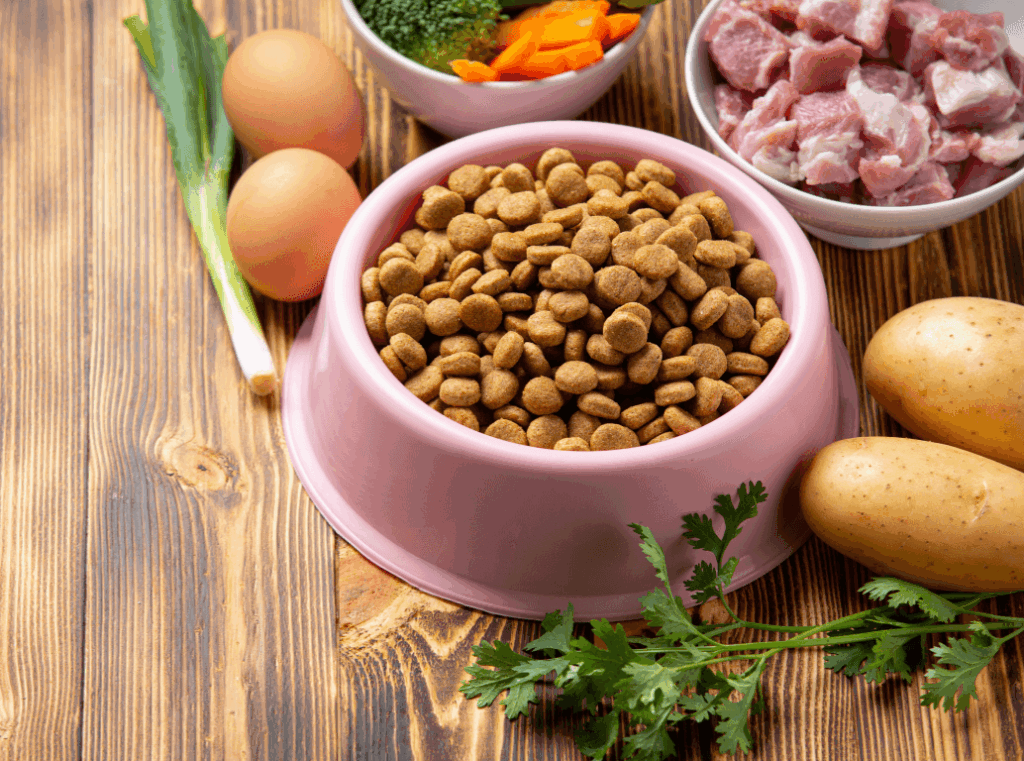
Pet food labels often use technical language that can be confusing at first glance. Understanding what these commonly used terms mean makes it easier to judge the quality of the ingredients in your dog’s or cat’s food.
- Meat meal: Meat meal is a highly concentrated, dried form of animal protein made through a rendering process that removes moisture from meat, fat, and bone. This creates a much higher protein content by weight than fresh meat, making it an efficient source of amino acids for muscle, skin, and coat health. The important detail is in how it’s labelled: a specific term like “chicken meal” usually indicates quality, while vague terms such as “meat meal” or “poultry meal” don’t tell you where the protein comes from and should be treated with caution.
- By-products: Meat by-products include parts of an animal that humans don’t typically eat, such as organ meats, which can be nutritious sources of protein, vitamins, and minerals for animals. The concern is when labels simply list ‘meat by-products’ without naming the source, making it hard to know what your pet is getting.
- Crude nutrients: The word ‘crude’ simply means ‘total’. It’s a standard way of showing how much of a nutrient (e.g., protein, fat, or fibre) is in the food, but it doesn’t indicate quality or source. For example, a food advertising a high crude protein content may get much of that protein from plant rather than meat sources.
- Derivatives: Derivatives can refer either to animal derivatives (like fats, bones, or other parts of the carcass) or vegetable derivatives (such as grain husks, pulp, or other plant scraps). Some derivatives, like organ meats, can add value, but vague wording often hides whether they’re nutritious or just low-quality fillers.
The general rule when looking at pet food labels is the more specific, the better. Clear, named ingredients signal quality, while vague wording should make you cautious.
Red Flags in Pet Food Marketing and Packaging
Marketing claims don’t always equal quality nutrition. Some brands use vague wording or bold promises to make foods look healthier than they are. Shift your focus from packaging buzzwords to the actual cat or dog food ingredients listed.
Here are a few red flags to look out for:
- Misleading wording: Terms like “chicken flavour” suggest meat but may have no real chicken, only additives to mimic the taste. Another common trick is the phrase “no added preservatives or colours”, which doesn’t mean the food is free of them, only that none were added during the most recent recipe update.
- Protein marketing tricks: A label boasting “80% animal protein” doesn’t mean the food is 80% meat. It simply means that of the total protein listed, 80% comes from animal sources, while the rest may come from plants. Always check the ingredient list and guaranteed analysis to see where the protein in your pet’s food is really coming from.
- Natural or biologically appropriate claims: Phrases like “made with natural ingredients” or “biologically appropriate” are often used to make dry foods sound healthier. While some dog food ingredients may start out natural, the heavy processing required to make kibble means the end product is very different from the fresh, raw ingredients it started with.
What Quality Cat and Dog Food Ingredients Look Like at AVIP
When you look closely at what goes into pet food, freshness and formulation make all the difference. At AVIP, our advantage starts with location. Our factory sits right next to a world-class meat processing plant, so freshly rendered proteins move from processing to production in as little as 12 hours. This speed helps preserve the natural value of the ingredients we use in our dog and cat foods.
Those ingredients are then shaped into recipes for complete diets by a team of on-site nutritionists, who apply their scientific knowledge to balance proteins, grains, fats, oils, vitamins, and minerals to ensure every recipe meets your pet’s needs at different life stages. Finally, each kibble is coated in-house with fresh, meat-based palatants that add flavour and aroma to encourage pets to eat consistently.
You can see this approach in action across our brands. Ideal uses this process to create balanced, scientifically formulated foods for both dogs and cats, from small breed dogs and growing puppies to kittens and adult cats. Trusty applies the same focus on quality but is developed with working and farm dogs in mind, offering dependable energy, muscle support, and essential nutrients to sustain long, active days.
At every step, our focus is on transparency and quality: fresh proteins, clear labelling, and recipes that combine science with local sourcing.
Understanding what to look for in your cat and dog food ingredients (and how to read them on a label) helps you look past the marketing to see the real value of what’s in your pet’s bowl. At AVIP, we make that decision easier with fresh proteins, local sourcing, and recipes created by nutrition experts to deliver honest, balanced food for pets.
Visit our website or follow us on Instagram or Facebook to learn more about our process, our products, and the pets who enjoy them.